Hills, boulders, and wind
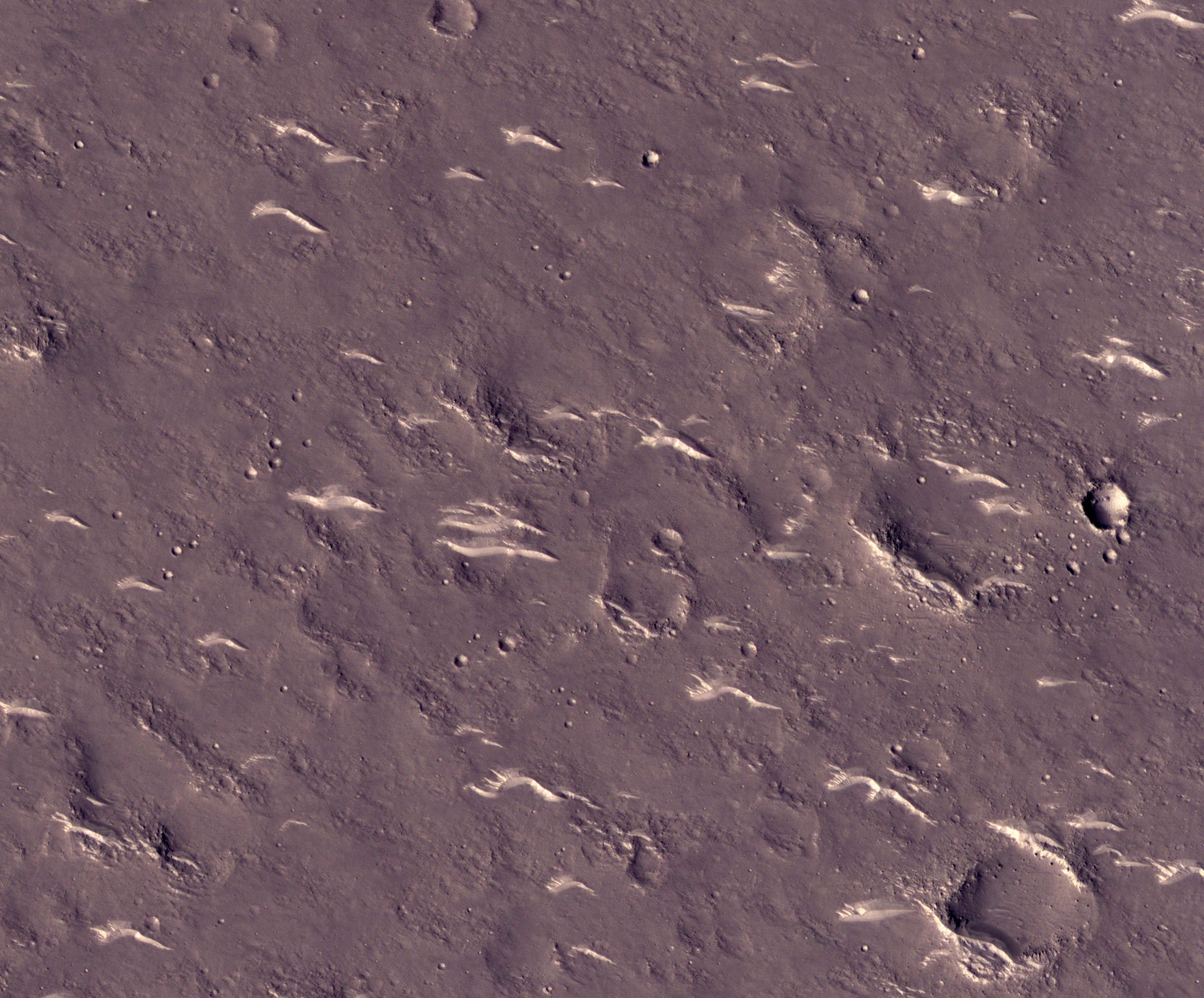
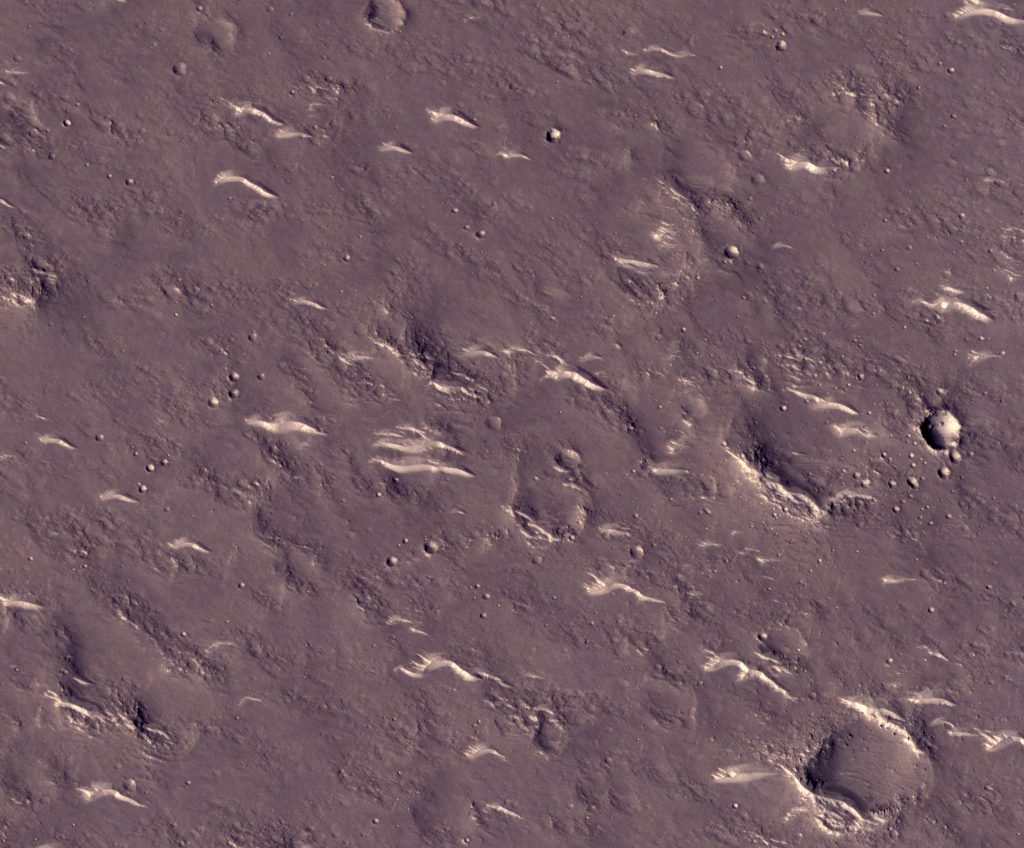
A piece of Mars: In the lower left of the image, a small hill stands above a plain partly covered by stabilized ripples. Boulders have rolled down the hill as it slowly erodes. If these ripples aren’t ever activated by the wind again, they will one day be completely buried by sediment eroded from this and other surrounding hills. (HiRISE ESP_031215_1830, NASA/JPL/University of Arizona)
Blue ribbon
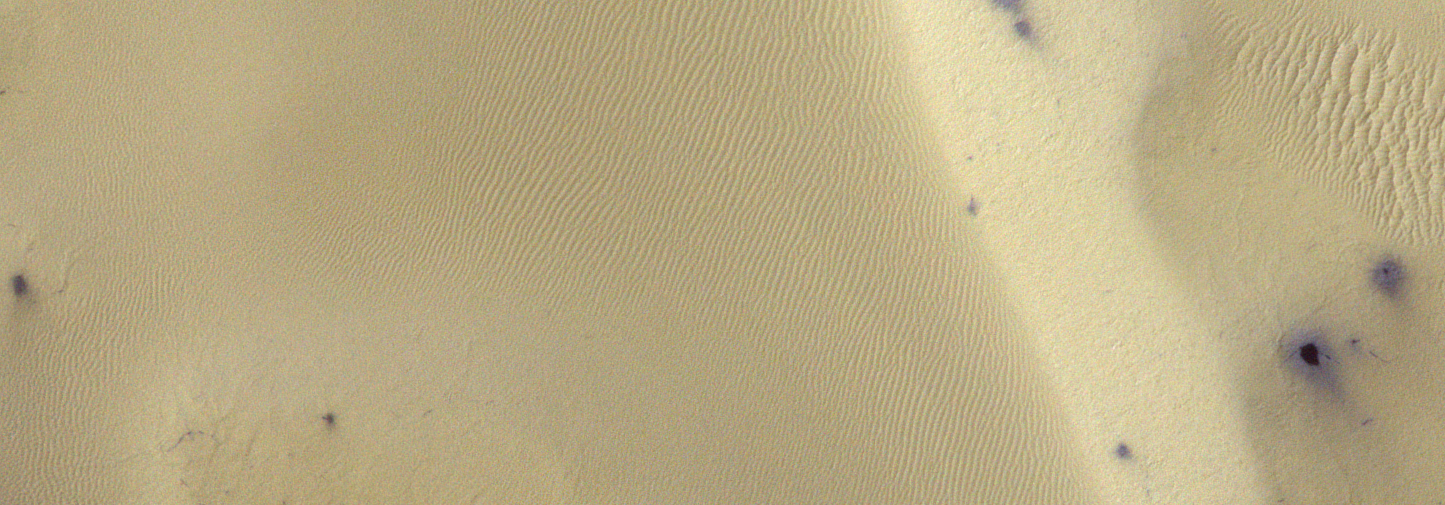
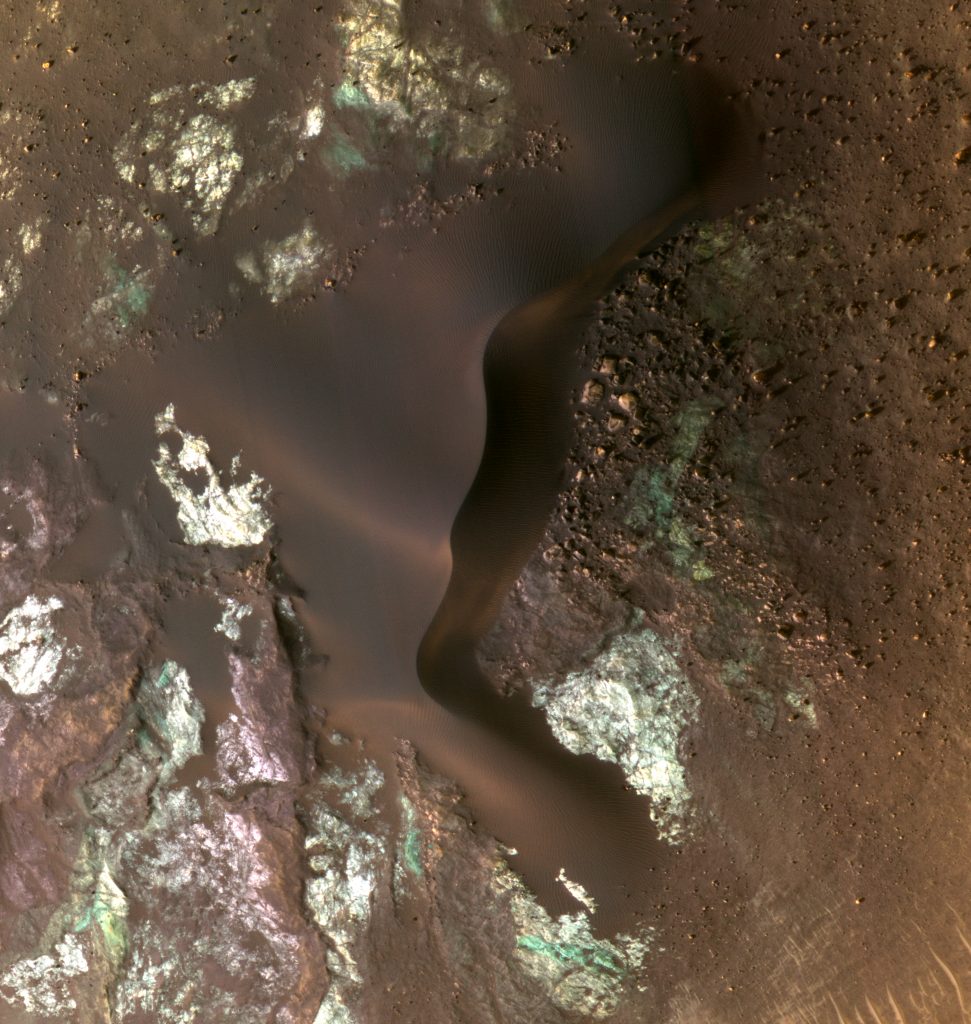
A piece of Mars: In ancient, wind-carved hills, a bluish ribbon of actively moving sand still winds its way. It is a remnant of a long-lived period of wind scour that shaped this landscape. (And it’s been stretched to look more blue than it really is — it’s really more of a dark gray.) (ESP_030932_1750, NASA/JPL/University of Arizona)
The colors of geology
A piece of Mars: Here in the bottom of a crater in Coprates Chasma is the intersection of two sets of ripples: dark, dust-free ripples at the bottom of the crater, and lighter ripples formed from debris that has come down the rim of the crater. (HiRISE ESP_030927_1675, NASA/JPL/University of Arizona)
Where does martian sand come from?
A piece of Mars: The source of dune sand on Mars is normally something of a mystery. But here on the interior wall of a small crater it appears that small gullies have eroded sediment from the wall and carried it down toward the center of the crater (toward the upper right). The bluish and tan regions are the material the gullies have transported, and the bluish sediments have formed into small aeolian ripples. The mystery is solved for this one small region of Mars: is it the same story elsewhere? (HiRISE ESP_030915_1290, NASA/JPL/University of Arizona)
New dust devils swirls
A piece of Mars: Swirly loops form on the martian surface as dust devils pass by, cleaning up dust on the surface and revealing the dark, rippled dune beneath. Every year the swirls get cleaned off and reform — such patterns are known to occur in only a few select places on Earth, but they are common on Mars. (HiRISE ESP_031199_2070, NASA/JPL/University of Arizona)
Dunes on crater bones
A piece of Mars. The dark circle (~170 m across) in the middle of the picture is the interior of what used to be a crater. It’s now almost completely eroded away, probably by the wind. Small dunes have formed on these former crater sediments — because the dunes seem to form mostly on this circular plateau, it’s likely that they’re made from sand derived from the former crater sediments (and thus these dunes have not traveled far). (HiRISE ESP_030622_2060, NASA/JPL/University of Arizona)
Topography and the wind
A piece of Mars: Everybody else loves this image because it shows an inverted channel — the remains of a stream that once flowed through this area. But I love it because the little dunes were also formed by a flow. The flow of the wind, that is. Here the wind is deflected by the former streambed, forming dunes that moved in the same direction (lower right to upper left). (HiRISE ESP_030609_1550, NASA/JPL/University of Arizona)
Modern art or windy Mars?
A piece of Mars: Is it modern art? Well maybe it looks like it from a distance. Up close, this is reality on Mars. These are dark dunes in the southern hemisphere, awaking from a long hibernation beneath bright winter frost (a touch of which can still be seen in white patches). The wind has begun to shape the dunes, leaving crayon streaks where dust devils have swept by. Maybe we’ll see those little ripples move this summer. (HiRISE ESP_030602_1080, NASA/JPL/University of Arizona)
- active | dunes | dust | dust devil | ice
- [ 1 ] Comment
- Tweet This !
Giant crayons on Mars
A piece of Mars: There are vast plains on Mars that display criss-crossing streaks like this. These are ~5 m (~16 feet) across, give or take. Did an alien drive a dune buggy all over, leaving behind tracks? Nope. These are the distinctive trails made by the passage of dust devils, which act like huge vacuum cleaners that suck up dust from the ground. The patterns of the tracks change every year as new dust devils churn away at the surface. (HiRISE ESP_030916_1250, NASA/JPL/University of Arizona)
Dunes in the spring
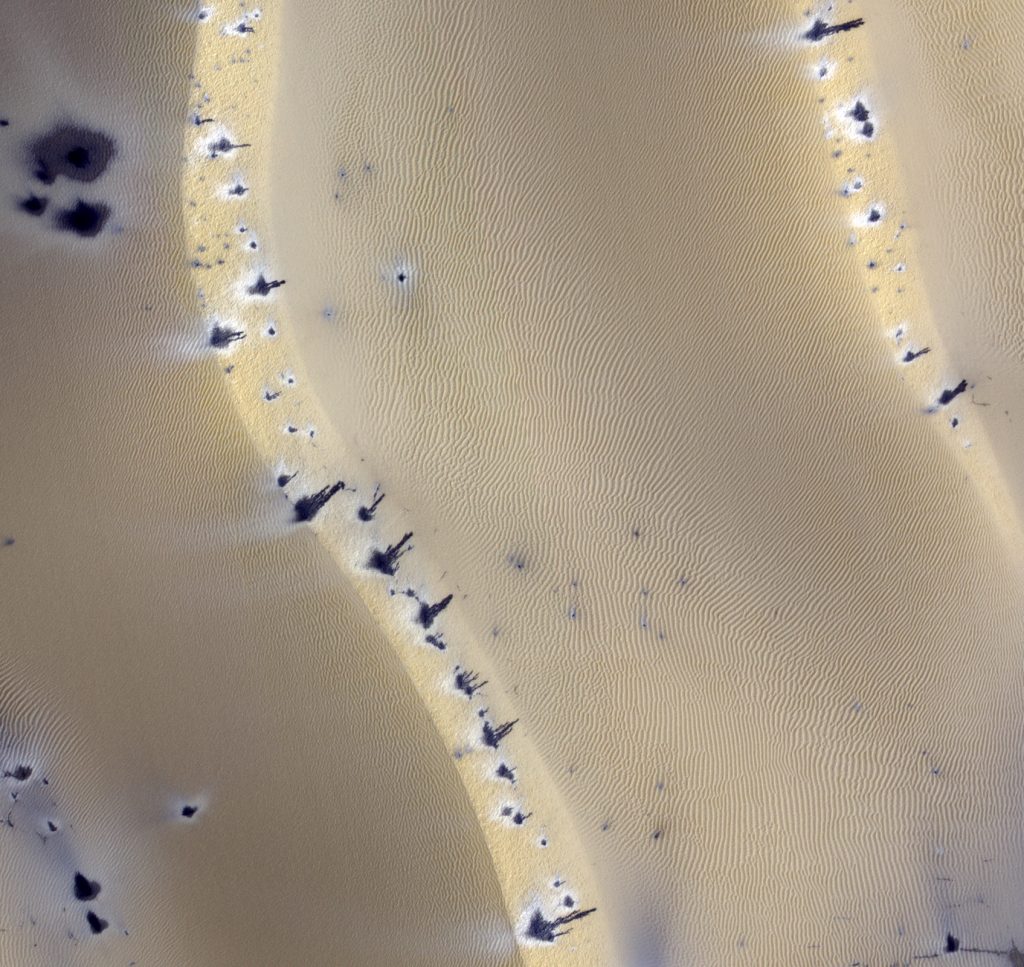
A piece of Mars: Dunes near the north and south poles get cold in the winter, just like they do on Earth. Except on Mars instead of H2O ice, it’s a mix of CO2 and H2O ice (mostly CO2). In the spring the white ice slowly disappears, revealing the dark dunes underneath. (HiRISE PSP_002033_1325, NASA/JPL/University of Arizona)